





Killing Pills
Don't be spoon-fed
According to WHO (World Health Organization), a counterfeit medicine is one which is deliberately and fraudulently mislabeled with respect to identity and/or
source. Counterfeit can apply to both branded and generic products and
counterfeit products may include products with the correct ingredients or with
the wrong ingredients, without active ingredients, with insufficient active
ingredients or with fake packaging.
Without the control from health authorities to guarantee their quality and
efficacy, counterfeit medicines give rise to multiple risks: they don’t ensure
quality, security nor therapeutic efficacy, they can endanger a patient’s health.
The multi-billion-pound global trade in bogus medicines is responsible for an
estimated half a million deaths a year.
Fake pharmaceutical drugs, whether sold directly over the internet or infiltrated
into the neighbourhood pharmacy or local hospitals, have become a huge and
fast-increasing threat.
Counterfeit medicines are easy to produce and vastly profitable. A drug costing
a fraction of a penny can be sold for at least 50 times that amount. In one case
100,000 fake tablets supplied by a Chinese manufacturer for about 25p each
were being sold for up to £20 each in the UK, worth £1.6 million in total.
Every year hundreds of thousands of consumers buy scam miracle cures for
conditions such as weight loss, baldness and impotence.
These products are often a waste of money, and they can also be dangerous.
That's why you should never start a new medicine, or stop a medicine that has
been prescribed for you, without speaking to a qualified health professional first,
such as your GP or a pharmacist.
"In over 50% of cases, medicines purchased over the Internet from illegal sites
that conceal their physical address have been found to be counterfeit." (WHO)
The internet is the biggest unregulated market in the world, it is easy to fall
victim to dishonest online pharmacies. Of course there are online pharmacies
that are perfectly legal, and offer a service to customers to faciliate their
purchase of medicines. However, a large number of websites operate illegally,
offering access to controlled medicines without a prescription, not to mention
non-approved and counterfeit products.
Common medicines scams
Thousands of websites offer scam health products for sale online. Beware of
websites that:
⦁
Promise a "new miracle cure" or "wonder breakthrough". In reality, their
products are probably not tested or proven to work.
⦁
Try to convince you with testimonials from previous customers. How do
you know these testimonials are genuine? Even if they are genuine, anecdotal
evidence such as this is not the same as the scientific evidence that genuine
medicines are based on.
⦁
Offer "no risk" money-back guarantees. Try to get your money back, and
the scammers will disappear.
⦁
Contain endorsements from a doctor or health professional who quotes
scientific evidence. Look closer, and you’ll see that these "doctors" are not
attached to any known institution or clinical practice, and the "evidence" hasn't
been published in a recognised journal.
Images courtesy of 'Kittikun Atsawintarangkul' and 'Renjith Krishnan' at
FreeDigitalPhotos.net
How to Spot a Counterfeit
Watch
Whenever you are planning to buy a branded watch, you should make sure that
it is a genuine product. It is very important to identify fake watches and to find
the ways by which you can be protected from such fraudulent deals. There are
a number of counterfeited watch companies that are manufacturing such
watches so ingeniously that nobody can easily recognise that it is a fake.
Counterfeiters are producing imitations of all famous luxury watch brands that
are sold worldwide. You can't get an authentic warranty by getting certificates
with same serial numbers in an accurately professional manner. It is very easy
to copy boxes, bags, kits, and instruction manuals in an ingenuous manner so
that nobody can believe it is a fake product. Rolex is one of the brands suffering
at the hands of counterfeiters.
Before buying a genuine watch, you should check whether the materials are
genuine, and that the watch comes with a sapphire crystal face and back,
without any scratches. The materials used in the manufacturing of the watches
will tell you the reality.
If a watch is manufactured with stainless steel or titanium, it will weigh more,
while the counterfeit watches are manufactured using aluminum, which is light
in weight. You can also estimate the quality of a genuine branded watch by its
functioning. If it has a quartz mechanism, it will be a genuine watch.
If you have any doubts while buying a watch that it might be a counterfeit, you
shouldn't buy it, as you will regret it afterward for paying so much. If you want to
purchase a Rolex watch, you should know how to spot a fake. You shouldn't
waste your money on counterfeit pieces of jewellery either. According to a
Swiss Customer Service survey, approximately 30-40 million counterfeit
watches are manufactured per year, so you should be aware of all
unscrupulous sellers that are selling fake Rolex watches.
It is estimated that almost 40% of counterfeit watches are manufactured in
China, as Chinese manufacturers are using tricks such as presenting the
counterfeit watch with a picture of the genuine prestigious watch brand on the
boxes. You will also find that the counterfeit version of any latest brand watch
reaches the marketplace before the genuine branded version.
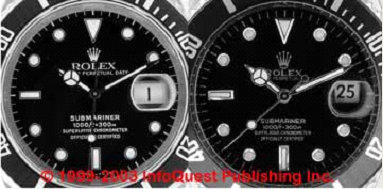
There are two kinds of counterfeit watch. The first kind of counterfeited watch
are presented with low prices, and have low quality, functionality and design.
The second kind of counterfeit watch resembles completely the genuine
designer watch, with high price tags. They are manufactured with relatively
good quality and materials. Counterfeit Rolex watches are unlawfully sold in the
marketplace to gain as much attraction as the original one. This is endemic in
Asian countries such as India, Taiwan, China and Korea. These are real
counterfeits of European designer watches, as they manufacture replicas of
designer watches.
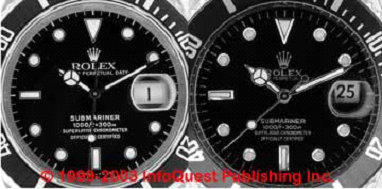
If you buy a Rolex watch, you should check its transparent back case, which
has unique features along with a genuine logo design. The weight of the
genuine branded Rolex is comparatively heavier than other counterfeit watches.
Therefore, you should check and mark the differences between genuine and
counterfeit watches before buying them.
John P Stevens is a internet marketer. You can see collection of Mens Watches
[http://www.freedomwatches.com/] to send as gifts.
Article Source: http://EzineArticles.com/expert/John_P_Stevens/351703
How to Distinguish Between a
Real and Fake Tech Support
Company?
The concept of online technical support companies have been resonating and it
has reached its highest crescendo, at the same time, the demand for the
service has also given a major fillip to the trend of online repair. Now-a-days,
people are no longer eager to carry their computer to the technician for a fix;
rather, whenever there is a mess then there is only one thing that resonates
and it is online computer technical support.
However, the trend of online technical support has provided newer realms for
false and malicious players and they have been indulged in tech support phone
scams to make quick money. So, what they do is call you by harnessing the
phone directories and by taking the name of some reputed organization like
Microsoft, Dell, HP and Apple they would like to serve you, and once you fall
prey to them and through remote computer access you give them entry in your
computer, it is from there where things start to exacerbate. They would sneak
through the records and use all information to their advantage for materializing
their malicious pursuit.
So, if you are someone who has a penchant for tech support service, in that
case, you should be highly cautious as malicious players may be hiding in
charade to pounce on you when the right time comes. So, in this piece, you
would get to know about the basic difference that keeps the original and fake
tech support providers apart.
1. Response Time is Fast
If call comes for tech support from any second party, in that case, don't
straightway believe them; rather, you must ask them regarding the response
time that they will take to resolve the issue. So, if they take longer time or you
figure out that after giving them the access to the computer they are not able to
fix the mess. In such cases, you must instantly report on this number 1-888-
282-0870 (toll free) to protect yourself from any trouble whatsoever.
2. Industry Experience
Industry experience is one such thing that will always keep you ahead. So, if
players like Dell, HP, Sony, and Apple call you for taking tech support, in that
case, there is something not so normal. These players are market forces and
they never do that kind of cheap promotion and marketing. So, never believe
such players who take their name, they are never the genuine ones that you are
assuming.
3. Affordability
When they ask for payment, in case of false players, they will not have a
genuine invoice and you can always look forward to the registration number and
seek clarification from "BBB" or also known as Better Business Bureau and
TRUSTe to solidify your faith on them.
4. Certification
When you are contacted by any tech support company then always seek for
their certification, ask the registration number from them, so once you do that
then you can figure out whether they are genuine or not.
Want to know more, Kindly read this blog. http://www.easytechy.co.uk/detect-
crooked-online-tech-support-company/
Article Source: http://EzineArticles.com/expert/Komal_Bhatia/1938357
which is deliberately and fraudulently mislabeled with respect to identity and/or
source. Counterfeit can apply to both branded and generic products and
counterfeit products may include products with the correct ingredients or with
the wrong ingredients, without active ingredients, with insufficient active
ingredients or with fake packaging.
Without the control from health authorities to guarantee their quality and
efficacy, counterfeit medicines give rise to multiple risks: they don’t ensure
quality, security nor therapeutic efficacy, they can endanger a patient’s health.
The multi-billion-pound global trade in bogus medicines is responsible for an
estimated half a million deaths a year.
Fake pharmaceutical drugs, whether sold directly over the internet or infiltrated
into the neighbourhood pharmacy or local hospitals, have become a huge and
fast-increasing threat.
Counterfeit medicines are easy to produce and vastly profitable. A drug costing
a fraction of a penny can be sold for at least 50 times that amount. In one case
100,000 fake tablets supplied by a Chinese manufacturer for about 25p each
were being sold for up to £20 each in the UK, worth £1.6 million in total.
Every year hundreds of thousands of consumers buy scam miracle cures for
conditions such as weight loss, baldness and impotence.
These products are often a waste of money, and they can also be dangerous.
That's why you should never start a new medicine, or stop a medicine that has
been prescribed for you, without speaking to a qualified health professional first,
such as your GP or a pharmacist.
"In over 50% of cases, medicines purchased over the Internet from illegal sites
that conceal their physical address have been found to be counterfeit." (WHO)
The internet is the biggest unregulated market in the world, it is easy to fall
victim to dishonest online pharmacies. Of course there are online pharmacies
that are perfectly legal, and offer a service to customers to faciliate their
purchase of medicines. However, a large number of websites operate illegally,
offering access to controlled medicines without a prescription, not to mention
non-approved and counterfeit products.
Common medicines scams
Thousands of websites offer scam health products for sale online. Beware of
websites that:
⦁
Promise a "new miracle cure" or "wonder breakthrough". In reality, their
products are probably not tested or proven to work.
⦁
Try to convince you with testimonials from previous customers. How do
you know these testimonials are genuine? Even if they are genuine, anecdotal
evidence such as this is not the same as the scientific evidence that genuine
medicines are based on.
⦁
Offer "no risk" money-back guarantees. Try to get your money back, and
the scammers will disappear.
⦁
Contain endorsements from a doctor or health professional who quotes
scientific evidence. Look closer, and you’ll see that these "doctors" are not
attached to any known institution or clinical practice, and the "evidence" hasn't
been published in a recognised journal.
Images courtesy of 'Kittikun Atsawintarangkul' and 'Renjith Krishnan' at
FreeDigitalPhotos.net
How to Spot a Counterfeit
Watch
Whenever you are planning to buy a branded watch, you should make sure that
it is a genuine product. It is very important to identify fake watches and to find
the ways by which you can be protected from such fraudulent deals. There are
a number of counterfeited watch companies that are manufacturing such
watches so ingeniously that nobody can easily recognise that it is a fake.
Counterfeiters are producing imitations of all famous luxury watch brands that
are sold worldwide. You can't get an authentic warranty by getting certificates
with same serial numbers in an accurately professional manner. It is very easy
to copy boxes, bags, kits, and instruction manuals in an ingenuous manner so
that nobody can believe it is a fake product. Rolex is one of the brands suffering
at the hands of counterfeiters.
Before buying a genuine watch, you should check whether the materials are
genuine, and that the watch comes with a sapphire crystal face and back,
without any scratches. The materials used in the manufacturing of the watches
will tell you the reality.
If a watch is manufactured with stainless steel or titanium, it will weigh more,
while the counterfeit watches are manufactured using aluminum, which is light
in weight. You can also estimate the quality of a genuine branded watch by its
functioning. If it has a quartz mechanism, it will be a genuine watch.
If you have any doubts while buying a watch that it might be a counterfeit, you
shouldn't buy it, as you will regret it afterward for paying so much. If you want to
purchase a Rolex watch, you should know how to spot a fake. You shouldn't
waste your money on counterfeit pieces of jewellery either. According to a
Swiss Customer Service survey, approximately 30-40 million counterfeit
watches are manufactured per year, so you should be aware of all
unscrupulous sellers that are selling fake Rolex watches.
It is estimated that almost 40% of counterfeit watches are manufactured in
China, as Chinese manufacturers are using tricks such as presenting the
counterfeit watch with a picture of the genuine prestigious watch brand on the
boxes. You will also find that the counterfeit version of any latest brand watch
reaches the marketplace before the genuine branded version.
There are two kinds of counterfeit watch. The first kind of counterfeited watch
are presented with low prices, and have low quality, functionality and design.
The second kind of counterfeit watch resembles completely the genuine
designer watch, with high price tags. They are manufactured with relatively
good quality and materials. Counterfeit Rolex watches are unlawfully sold in the
marketplace to gain as much attraction as the original one. This is endemic in
Asian countries such as India, Taiwan, China and Korea. These are real
counterfeits of European designer watches, as they manufacture replicas of
designer watches.
If you buy a Rolex watch, you should check its transparent back case, which
has unique features along with a genuine logo design. The weight of the
genuine branded Rolex is comparatively heavier than other counterfeit watches.
Therefore, you should check and mark the differences between genuine and
counterfeit watches before buying them.
John P Stevens is a internet marketer. You can see collection of Mens Watches
[http://www.freedomwatches.com/] to send as gifts.
Article Source: http://EzineArticles.com/expert/John_P_Stevens/351703
How to Distinguish Between a
Real and Fake Tech Support
Company?
The concept of online technical support companies have been resonating and it
has reached its highest crescendo, at the same time, the demand for the
service has also given a major fillip to the trend of online repair. Now-a-days,
people are no longer eager to carry their computer to the technician for a fix;
rather, whenever there is a mess then there is only one thing that resonates
and it is online computer technical support.
However, the trend of online technical support has provided newer realms for
false and malicious players and they have been indulged in tech support phone
scams to make quick money. So, what they do is call you by harnessing the
phone directories and by taking the name of some reputed organization like
Microsoft, Dell, HP and Apple they would like to serve you, and once you fall
prey to them and through remote computer access you give them entry in your
computer, it is from there where things start to exacerbate. They would sneak
through the records and use all information to their advantage for materializing
their malicious pursuit.
So, if you are someone who has a penchant for tech support service, in that
case, you should be highly cautious as malicious players may be hiding in
charade to pounce on you when the right time comes. So, in this piece, you
would get to know about the basic difference that keeps the original and fake
tech support providers apart.
1. Response Time is Fast
If call comes for tech support from any second party, in that case, don't
straightway believe them; rather, you must ask them regarding the response
time that they will take to resolve the issue. So, if they take longer time or you
figure out that after giving them the access to the computer they are not able to
fix the mess. In such cases, you must instantly report on this number 1-888-
282-0870 (toll free) to protect yourself from any trouble whatsoever.
2. Industry Experience
Industry experience is one such thing that will always keep you ahead. So, if
players like Dell, HP, Sony, and Apple call you for taking tech support, in that
case, there is something not so normal. These players are market forces and
they never do that kind of cheap promotion and marketing. So, never believe
such players who take their name, they are never the genuine ones that you are
assuming.
3. Affordability
When they ask for payment, in case of false players, they will not have a
genuine invoice and you can always look forward to the registration number and
seek clarification from "BBB" or also known as Better Business Bureau and
TRUSTe to solidify your faith on them.
4. Certification
When you are contacted by any tech support company then always seek for
their certification, ask the registration number from them, so once you do that
then you can figure out whether they are genuine or not.
Want to know more, Kindly read this blog. http://www.easytechy.co.uk/detect-
crooked-online-tech-support-company/
Article Source: http://EzineArticles.com/expert/Komal_Bhatia/1938357
which is deliberately and fraudulently mislabeled with respect to identity and/or
source. Counterfeit can apply to both branded and generic products and
counterfeit products may include products with the correct ingredients or with
the wrong ingredients, without active ingredients, with insufficient active
ingredients or with fake packaging.
Without the control from health authorities to guarantee their quality and
efficacy, counterfeit medicines give rise to multiple risks: they don’t ensure
quality, security nor therapeutic efficacy, they can endanger a patient’s health.
The multi-billion-pound global trade in bogus medicines is responsible for an
estimated half a million deaths a year.
Fake pharmaceutical drugs, whether sold directly over the internet or infiltrated
into the neighbourhood pharmacy or local hospitals, have become a huge and
fast-increasing threat.
Counterfeit medicines are easy to produce and vastly profitable. A drug costing
a fraction of a penny can be sold for at least 50 times that amount. In one case
100,000 fake tablets supplied by a Chinese manufacturer for about 25p each
were being sold for up to £20 each in the UK, worth £1.6 million in total.
Every year hundreds of thousands of consumers buy scam miracle cures for
conditions such as weight loss, baldness and impotence.
These products are often a waste of money, and they can also be dangerous.
That's why you should never start a new medicine, or stop a medicine that has
been prescribed for you, without speaking to a qualified health professional first,
such as your GP or a pharmacist.
"In over 50% of cases, medicines purchased over the Internet from illegal sites
that conceal their physical address have been found to be counterfeit." (WHO)
The internet is the biggest unregulated market in the world, it is easy to fall
victim to dishonest online pharmacies. Of course there are online pharmacies
that are perfectly legal, and offer a service to customers to faciliate their
purchase of medicines. However, a large number of websites operate illegally,
offering access to controlled medicines without a prescription, not to mention
non-approved and counterfeit products.
Common medicines scams
Thousands of websites offer scam health products for sale online. Beware of
websites that:
⦁
Promise a "new miracle cure" or "wonder breakthrough". In reality, their
products are probably not tested or proven to work.
⦁
Try to convince you with testimonials from previous customers. How do
you know these testimonials are genuine? Even if they are genuine, anecdotal
evidence such as this is not the same as the scientific evidence that genuine
medicines are based on.
⦁
Offer "no risk" money-back guarantees. Try to get your money back, and
the scammers will disappear.
⦁
Contain endorsements from a doctor or health professional who quotes
scientific evidence. Look closer, and you’ll see that these "doctors" are not
attached to any known institution or clinical practice, and the "evidence" hasn't
been published in a recognised journal.
Images courtesy of 'Kittikun Atsawintarangkul' and 'Renjith Krishnan' at
FreeDigitalPhotos.net
How to Spot a Counterfeit
Watch
Whenever you are planning to buy a branded watch, you should make sure that
it is a genuine product. It is very important to identify fake watches and to find
the ways by which you can be protected from such fraudulent deals. There are
a number of counterfeited watch companies that are manufacturing such
watches so ingeniously that nobody can easily recognise that it is a fake.
Counterfeiters are producing imitations of all famous luxury watch brands that
are sold worldwide. You can't get an authentic warranty by getting certificates
with same serial numbers in an accurately professional manner. It is very easy
to copy boxes, bags, kits, and instruction manuals in an ingenuous manner so
that nobody can believe it is a fake product. Rolex is one of the brands suffering
at the hands of counterfeiters.
Before buying a genuine watch, you should check whether the materials are
genuine, and that the watch comes with a sapphire crystal face and back,
without any scratches. The materials used in the manufacturing of the watches
will tell you the reality.
If a watch is manufactured with stainless steel or titanium, it will weigh more,
while the counterfeit watches are manufactured using aluminum, which is light
in weight. You can also estimate the quality of a genuine branded watch by its
functioning. If it has a quartz mechanism, it will be a genuine watch.
If you have any doubts while buying a watch that it might be a counterfeit, you
shouldn't buy it, as you will regret it afterward for paying so much. If you want to
purchase a Rolex watch, you should know how to spot a fake. You shouldn't
waste your money on counterfeit pieces of jewellery either. According to a
Swiss Customer Service survey, approximately 30-40 million counterfeit
watches are manufactured per year, so you should be aware of all
unscrupulous sellers that are selling fake Rolex watches.
It is estimated that almost 40% of counterfeit watches are manufactured in
China, as Chinese manufacturers are using tricks such as presenting the
counterfeit watch with a picture of the genuine prestigious watch brand on the
boxes. You will also find that the counterfeit version of any latest brand watch
reaches the marketplace before the genuine branded version.
There are two kinds of counterfeit watch. The first kind of counterfeited watch
are presented with low prices, and have low quality, functionality and design.
The second kind of counterfeit watch resembles completely the genuine
designer watch, with high price tags. They are manufactured with relatively
good quality and materials. Counterfeit Rolex watches are unlawfully sold in the
marketplace to gain as much attraction as the original one. This is endemic in
Asian countries such as India, Taiwan, China and Korea. These are real
counterfeits of European designer watches, as they manufacture replicas of
designer watches.
If you buy a Rolex watch, you should check its transparent back case, which
has unique features along with a genuine logo design. The weight of the
genuine branded Rolex is comparatively heavier than other counterfeit watches.
Therefore, you should check and mark the differences between genuine and
counterfeit watches before buying them.
John P Stevens is a internet marketer. You can see collection of Mens Watches
[http://www.freedomwatches.com/] to send as gifts.
Article Source: http://EzineArticles.com/expert/John_P_Stevens/351703
How to Distinguish Between a
Real and Fake Tech Support
Company?
The concept of online technical support companies have been resonating and it
has reached its highest crescendo, at the same time, the demand for the
service has also given a major fillip to the trend of online repair. Now-a-days,
people are no longer eager to carry their computer to the technician for a fix;
rather, whenever there is a mess then there is only one thing that resonates
and it is online computer technical support.
However, the trend of online technical support has provided newer realms for
false and malicious players and they have been indulged in tech support phone
scams to make quick money. So, what they do is call you by harnessing the
phone directories and by taking the name of some reputed organization like
Microsoft, Dell, HP and Apple they would like to serve you, and once you fall
prey to them and through remote computer access you give them entry in your
computer, it is from there where things start to exacerbate. They would sneak
through the records and use all information to their advantage for materializing
their malicious pursuit.
So, if you are someone who has a penchant for tech support service, in that
case, you should be highly cautious as malicious players may be hiding in
charade to pounce on you when the right time comes. So, in this piece, you
would get to know about the basic difference that keeps the original and fake
tech support providers apart.
1. Response Time is Fast
If call comes for tech support from any second party, in that case, don't
straightway believe them; rather, you must ask them regarding the response
time that they will take to resolve the issue. So, if they take longer time or you
figure out that after giving them the access to the computer they are not able to
fix the mess. In such cases, you must instantly report on this number 1-888-
282-0870 (toll free) to protect yourself from any trouble whatsoever.
2. Industry Experience
Industry experience is one such thing that will always keep you ahead. So, if
players like Dell, HP, Sony, and Apple call you for taking tech support, in that
case, there is something not so normal. These players are market forces and
they never do that kind of cheap promotion and marketing. So, never believe
such players who take their name, they are never the genuine ones that you are
assuming.
3. Affordability
When they ask for payment, in case of false players, they will not have a
genuine invoice and you can always look forward to the registration number and
seek clarification from "BBB" or also known as Better Business Bureau and
TRUSTe to solidify your faith on them.
4. Certification
When you are contacted by any tech support company then always seek for
their certification, ask the registration number from them, so once you do that
then you can figure out whether they are genuine or not.
Want to know more, Kindly read this blog. http://www.easytechy.co.uk/detect-
crooked-online-tech-support-company/
Article Source: http://EzineArticles.com/expert/Komal_Bhatia/1938357


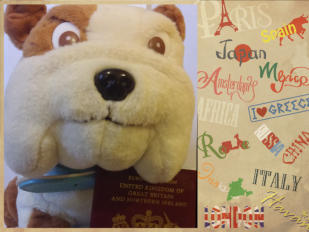
Fake puppy can go on
holiday with fake puppy
passport
The puppy passport scam that exposes the UK to risk of a rabies
outbreak. Unscrupulous Eastern European vets are duping dog lovers
into believing they're buying vaccinated animals. Then as a result of poor
checks at ports these animals come into the UK without the proper
inoculations. The UK dog loving public think they are purchasing a
healthy pet, with no knowledge that the animal has been imported illegally
and could in fact be carrying a killer disease. Dogs could also bring
tapeworm that causes life-threatening liver problems in humans
This scam came to light after an investigation by the Dogs Trust, an
investigator transported a toy dog through security without proper checks,
the toy dog's pet passport number and microchip number were both fake.
This stuffed toy was smuggled in three times without being noticed.
Hoping to go next ...
17 Ways To Determine If A
Beanie Baby Is Counterfeit
You should always buy Ty Beanie Babies from reputable dealers or from
sellers who you know how to contact. These dealers and sellers should
also have many references and/or feedback from other people they have
done business with.
Most counterfeit Beanies are easy to spot if you know what to look for. If
you don't know what to look for then you will probably have a hard time
telling most counterfeits from authentic Ty Beanie Babies.
Beanie Baby shows are a good place to check out expensive Beanies.
Try to handle them if you can. Get to know the feel of the fabric and their
overall appearance.
Some counterfeits are excellent reproductions, but regardless of how
good the counterfeits look, they usually have many mistakes. It is never
just one mistake.
If you are buying expensive Beanie Babies, then you should educate
yourself on the counterfeits or at least know where to find the information
when you need it.
Most of the mistakes on the counterfeits can be found on the tags.
Become familiar with the different generation hang tags and tush tags or
know where to look to find this information.
Below are 17 ways to determine if a Beanie Baby is counterfeit:
1. Many of the counterfeits have spelling errors on the tags, but keep in
mind that so do some of the authentic Ty Beanie Babies. So you usually
have to look for other mistakes beside just this.
2. Check the tag dates and the addresses to make sure they are correct.
Many of the counterfeits have the wrong date on the tush tag.
3. Compare the tags of the suspect Beanie with the tags of another Ty
Beanie Baby that you know to be authentic.
4. Is the type on the tags too light or too dark? Is it the right typeface?
5. Compare the tags to an authentic Ty Beanie Baby's tags and determine
if the tags are smaller or larger than the authentic tags.
6. Compare the stock color inside the hang tag to another hang tag. Is it
too white? Authentic tags have an off-white color.
7. Are the color of the hang tags identical? Or does the red and yellow on
the hang tag look muted or too light or too dark? The hang tag should be
blue red and not orange red.
8. The yellow star on the hang tag should be a bright sunshine yellow, not
a mustard color.
9. Some of the counterfeits have a yellow star on their hang tag that have
points that are too "pointy." The points of authentic hang tag stars are
slightly rounded.
10. Check the gold edge on the hang tag. It should have a nice clean line
and be a light bright gold color. It shouldn't be brassy.
11. Check the overall size and shape of the Beanie. Some of the
counterfeit Ty teddy bears have ears that are either too small or too large
or perhaps the legs or arms are too short or are shaped strangely.
12. Is the teddy bear's head too large or overstuffed?
13. Check the eyes to see if they are too close together or too big or too
small.
14. Are the eyes a solid color? Some Beanie Baby eyes are a solid color
and some are not. Humphrey the camel has solid black eyes but most of
the counterfeit Humphrey have eyes that are two-tone.
15. Check the fabric and see if it is rough or if the color is too dark or too
light.
16. Does the fabric nap look right? Is the fabric rough, stiff or the wrong
color?
17. Most authentic Beanies have nice plush fabric that "flows" in all
directions and doesn't get "wrinkly."
One place you should avoid buying expensive Beanie Babies that are not
authenticated is online auctions like eBay. Odds are that if you buy
enough of these expensive Beanies that are not authenticated, that you
will eventually end up buying some that are counterfeit
Barry Stein is the owner of http://BarrysBeanies.com where he offers
retail and wholesale Beanie Babies.
Article Source: http://EzineArticles.com/expert/Barry_Stein/3602
Top Tips for Detecting
Counterfeit Goods
Comparatively few people would like to come home with their latest
prized possession, only to subsequently discover that they have what is,
in fact, a fake or counterfeit.
The distress involved can be significant and of course, the chances are
that your counterfeit item is worth a fraction of what you have just paid for
it.
So what can you, as an ordinary consumer, do to try and avoid
purchasing fake goods?
Here are a few top tips that might help - although they can't absolutely
guarantee to protect your interests in all circumstances.
1. Incline to purchase from recognized and established sources. Major
high street retailers and established Internet vendors should be typically a
safer bet than stalls on the market or people hawking goods around pubs
and clubs etc.
2. Be suspicious about "too-good-to-be-true" prices. If something is
unbelievably cheap then there is a much higher chance that it is either a
counterfeit or even worse, it has been stolen.
3. Be doubly cautious about purchasing branded items at low prices in
overseas tourist spots. Although the different tax regimes in different
countries may lead to some items being cheaper than they are normally
at home, even so, it might be naïve to assume that those differences
would account for something being 75% cheaper than you have ever
seen it before. Remember that many spivs and other retailers of fakes
specifically target tourists who have perhaps lowered their guard as a
result of being on holiday and relaxed.
4. Do a little research about anti-counterfeit measures. Most of the major
global brands now use some form of brand and consumer protection in
their products but that will be useless to you unless you know what you're
looking for. For example, some now use anti-counterfeiting measures that
can be picked up by an application on a smart phone which will give you
some indication as to whether the item concerned is genuine or not.
5. Watch out for 'brown bag' retailing. Some goods are produced to
relatively high standards of copying but the fakers try to cut back on
similar efforts with the packaging. So, if it looks like a genuine item but is
suspiciously packaged, walk away.
6. Look carefully at the legal jurisdiction the server is based in when
buying across the Internet. In some parts of the world, the anti-counterfeit
retailing laws are simply not enforced and that could put you at risk.
7. Always take your time when handling and inspecting a product. Some
fakes are produced to fool the eye but even a cursory inspection and
handling will indicate that their materials are sub-standard. Of course, this
isn't entirely infallible but always make sure that you handle the exact
item you are planning to purchase. Don't inspect one then accept another
"boxed one untouched" from another part of the retail establishment or
stall.
Above all, research the specific item you are considering buying in
advance. There may be plenty of tips available on the Internet as to how
to spot specific common shortcomings in any fakes of the particular item
you are considering.
Article Source: http://EzineArticles.com/expert/Ron_T./1996835
outbreak. Unscrupulous Eastern European vets are duping dog lovers
into believing they're buying vaccinated animals. Then as a result of poor
checks at ports these animals come into the UK without the proper
inoculations. The UK dog loving public think they are purchasing a
healthy pet, with no knowledge that the animal has been imported illegally
and could in fact be carrying a killer disease. Dogs could also bring
tapeworm that causes life-threatening liver problems in humans
This scam came to light after an investigation by the Dogs Trust, an
investigator transported a toy dog through security without proper checks,
the toy dog's pet passport number and microchip number were both fake.
This stuffed toy was smuggled in three times without being noticed.
Hoping to go next ...
17 Ways To Determine If A
Beanie Baby Is Counterfeit
You should always buy Ty Beanie Babies from reputable dealers or from
sellers who you know how to contact. These dealers and sellers should
also have many references and/or feedback from other people they have
done business with.
Most counterfeit Beanies are easy to spot if you know what to look for. If
you don't know what to look for then you will probably have a hard time
telling most counterfeits from authentic Ty Beanie Babies.
Beanie Baby shows are a good place to check out expensive Beanies.
Try to handle them if you can. Get to know the feel of the fabric and their
overall appearance.
Some counterfeits are excellent reproductions, but regardless of how
good the counterfeits look, they usually have many mistakes. It is never
just one mistake.
If you are buying expensive Beanie Babies, then you should educate
yourself on the counterfeits or at least know where to find the information
when you need it.
Most of the mistakes on the counterfeits can be found on the tags.
Become familiar with the different generation hang tags and tush tags or
know where to look to find this information.
Below are 17 ways to determine if a Beanie Baby is counterfeit:
1. Many of the counterfeits have spelling errors on the tags, but keep in
mind that so do some of the authentic Ty Beanie Babies. So you usually
have to look for other mistakes beside just this.
2. Check the tag dates and the addresses to make sure they are correct.
Many of the counterfeits have the wrong date on the tush tag.
3. Compare the tags of the suspect Beanie with the tags of another Ty
Beanie Baby that you know to be authentic.
4. Is the type on the tags too light or too dark? Is it the right typeface?
5. Compare the tags to an authentic Ty Beanie Baby's tags and determine
if the tags are smaller or larger than the authentic tags.
6. Compare the stock color inside the hang tag to another hang tag. Is it
too white? Authentic tags have an off-white color.
7. Are the color of the hang tags identical? Or does the red and yellow on
the hang tag look muted or too light or too dark? The hang tag should be
blue red and not orange red.
8. The yellow star on the hang tag should be a bright sunshine yellow, not
a mustard color.
9. Some of the counterfeits have a yellow star on their hang tag that have
points that are too "pointy." The points of authentic hang tag stars are
slightly rounded.
10. Check the gold edge on the hang tag. It should have a nice clean line
and be a light bright gold color. It shouldn't be brassy.
11. Check the overall size and shape of the Beanie. Some of the
counterfeit Ty teddy bears have ears that are either too small or too large
or perhaps the legs or arms are too short or are shaped strangely.
12. Is the teddy bear's head too large or overstuffed?
13. Check the eyes to see if they are too close together or too big or too
small.
14. Are the eyes a solid color? Some Beanie Baby eyes are a solid color
and some are not. Humphrey the camel has solid black eyes but most of
the counterfeit Humphrey have eyes that are two-tone.
15. Check the fabric and see if it is rough or if the color is too dark or too
light.
16. Does the fabric nap look right? Is the fabric rough, stiff or the wrong
color?
17. Most authentic Beanies have nice plush fabric that "flows" in all
directions and doesn't get "wrinkly."
One place you should avoid buying expensive Beanie Babies that are not
authenticated is online auctions like eBay. Odds are that if you buy
enough of these expensive Beanies that are not authenticated, that you
will eventually end up buying some that are counterfeit
Barry Stein is the owner of http://BarrysBeanies.com where he offers
retail and wholesale Beanie Babies.
Article Source: http://EzineArticles.com/expert/Barry_Stein/3602
Top Tips for Detecting
Counterfeit Goods
Comparatively few people would like to come home with their latest
prized possession, only to subsequently discover that they have what is,
in fact, a fake or counterfeit.
The distress involved can be significant and of course, the chances are
that your counterfeit item is worth a fraction of what you have just paid for
it.
So what can you, as an ordinary consumer, do to try and avoid
purchasing fake goods?
Here are a few top tips that might help - although they can't absolutely
guarantee to protect your interests in all circumstances.
1. Incline to purchase from recognized and established sources. Major
high street retailers and established Internet vendors should be typically a
safer bet than stalls on the market or people hawking goods around pubs
and clubs etc.
2. Be suspicious about "too-good-to-be-true" prices. If something is
unbelievably cheap then there is a much higher chance that it is either a
counterfeit or even worse, it has been stolen.
3. Be doubly cautious about purchasing branded items at low prices in
overseas tourist spots. Although the different tax regimes in different
countries may lead to some items being cheaper than they are normally
at home, even so, it might be naïve to assume that those differences
would account for something being 75% cheaper than you have ever
seen it before. Remember that many spivs and other retailers of fakes
specifically target tourists who have perhaps lowered their guard as a
result of being on holiday and relaxed.
4. Do a little research about anti-counterfeit measures. Most of the major
global brands now use some form of brand and consumer protection in
their products but that will be useless to you unless you know what you're
looking for. For example, some now use anti-counterfeiting measures that
can be picked up by an application on a smart phone which will give you
some indication as to whether the item concerned is genuine or not.
5. Watch out for 'brown bag' retailing. Some goods are produced to
relatively high standards of copying but the fakers try to cut back on
similar efforts with the packaging. So, if it looks like a genuine item but is
suspiciously packaged, walk away.
6. Look carefully at the legal jurisdiction the server is based in when
buying across the Internet. In some parts of the world, the anti-counterfeit
retailing laws are simply not enforced and that could put you at risk.
7. Always take your time when handling and inspecting a product. Some
fakes are produced to fool the eye but even a cursory inspection and
handling will indicate that their materials are sub-standard. Of course, this
isn't entirely infallible but always make sure that you handle the exact
item you are planning to purchase. Don't inspect one then accept another
"boxed one untouched" from another part of the retail establishment or
stall.
Above all, research the specific item you are considering buying in
advance. There may be plenty of tips available on the Internet as to how
to spot specific common shortcomings in any fakes of the particular item
you are considering.
Article Source: http://EzineArticles.com/expert/Ron_T./1996835















Killing Pills
Don't be spoon-fed
According to WHO (World Health Organization), a counterfeit
medicine is one which is deliberately and fraudulently
mislabeled with respect to identity and/or source. Counterfeit
can apply to both branded and generic products and
counterfeit products may include products with the correct
ingredients or with the wrong ingredients, without active
ingredients, with insufficient active ingredients or with fake
packaging.
Without the control from health authorities to guarantee their
quality and efficacy, counterfeit medicines give rise to
multiple risks: they don’t ensure quality, security nor
therapeutic efficacy, they can endanger a patient’s health.
The multi-billion-pound global trade in bogus medicines is
responsible for an estimated half a million deaths a year.
Fake pharmaceutical drugs, whether sold directly over the
internet or infiltrated into the neighbourhood pharmacy or
local hospitals, have become a huge and fast-increasing
threat.
Counterfeit medicines are easy to produce and vastly
profitable. A drug costing a fraction of a penny can be sold
for at least 50 times that amount. In one case 100,000 fake
tablets supplied by a Chinese manufacturer for about 25p
each were being sold for up to £20 each in the UK, worth
£1.6 million in total.
Every year hundreds of thousands of consumers buy scam
miracle cures for conditions such as weight loss, baldness
and impotence.
These products are often a waste of money, and they can
also be dangerous.
That's why you should never start a new medicine, or stop a
medicine that has been prescribed for you, without speaking
to a qualified health professional first, such as your GP or a
pharmacist.
"In over 50% of cases, medicines purchased over the
Internet from illegal sites that conceal their physical address
have been found to be counterfeit." (WHO)
The internet is the biggest unregulated market in the world, it
is easy to fall victim to dishonest online pharmacies. Of
course there are online pharmacies that are perfectly legal,
and offer a service to customers to faciliate their purchase of
medicines. However, a large number of websites operate
illegally, offering access to controlled medicines without a
prescription, not to mention non-approved and counterfeit
products.
Common medicines scams
Thousands of websites offer scam health products for sale
online. Beware of websites that:
⦁
Promise a "new miracle cure" or "wonder
breakthrough". In reality, their products are probably not
tested or proven to work.
⦁
Try to convince you with testimonials from previous
customers. How do you know these testimonials are
genuine? Even if they are genuine, anecdotal evidence such
as this is not the same as the scientific evidence that
genuine medicines are based on.
⦁
Offer "no risk" money-back guarantees. Try to get your
money back, and the scammers will disappear.
⦁
Contain endorsements from a doctor or health
professional who quotes scientific evidence. Look closer, and
you’ll see that these "doctors" are not attached to any known
institution or clinical practice, and the "evidence" hasn't been
published in a recognised journal.
Images courtesy of 'Kittikun Atsawintarangkul' and 'Renjith
Krishnan' at FreeDigitalPhotos.net
How to Spot a Counterfeit
Watch
Whenever you are planning to buy a branded watch, you
should make sure that it is a genuine product. It is very
important to identify fake watches and to find the ways by
which you can be protected from such fraudulent deals.
There are a number of counterfeited watch companies that
are manufacturing such watches so ingeniously that nobody
can easily recognise that it is a fake.
Counterfeiters are producing imitations of all famous luxury
watch brands that are sold worldwide. You can't get an
authentic warranty by getting certificates with same serial
numbers in an accurately professional manner. It is very easy
to copy boxes, bags, kits, and instruction manuals in an
ingenuous manner so that nobody can believe it is a fake
product. Rolex is one of the brands suffering at the hands of
counterfeiters.
Before buying a genuine watch, you should check whether
the materials are genuine, and that the watch comes with a
sapphire crystal face and back, without any scratches. The
materials used in the manufacturing of the watches will tell
you the reality.
If a watch is manufactured with stainless steel or titanium, it
will weigh more, while the counterfeit watches are
manufactured using aluminum, which is light in weight. You
can also estimate the quality of a genuine branded watch by
its functioning. If it has a quartz mechanism, it will be a
genuine watch.
If you have any doubts while buying a watch that it might be
a counterfeit, you shouldn't buy it, as you will regret it
afterward for paying so much. If you want to purchase a
Rolex watch, you should know how to spot a fake. You
shouldn't waste your money on counterfeit pieces of
jewellery either. According to a Swiss Customer Service
survey, approximately 30-40 million counterfeit watches are
manufactured per year, so you should be aware of all
unscrupulous sellers that are selling fake Rolex watches.
It is estimated that almost 40% of counterfeit watches are
manufactured in China, as Chinese manufacturers are using
tricks such as presenting the counterfeit watch with a picture
of the genuine prestigious watch brand on the boxes. You will
also find that the counterfeit version of any latest brand
watch reaches the marketplace before the genuine branded
version.
There are two kinds of counterfeit watch. The first kind of
counterfeited watch are presented with low prices, and have
low quality, functionality and design. The second kind of
counterfeit watch resembles completely the genuine
designer watch, with high price tags. They are manufactured
with relatively good quality and materials. Counterfeit Rolex
watches are unlawfully sold in the marketplace to gain as
much attraction as the original one. This is endemic in Asian
countries such as India, Taiwan, China and Korea. These are
real counterfeits of European designer watches, as they
manufacture replicas of designer watches.
If you buy a Rolex watch, you should check its transparent
back case, which has unique features along with a genuine
logo design. The weight of the genuine branded Rolex is
comparatively heavier than other counterfeit watches.
Therefore, you should check and mark the differences
between genuine and counterfeit watches before buying
them.
John P Stevens is a internet marketer. You can see collection
of Mens Watches [http://www.freedomwatches.com/] to send
as gifts. Article source
http://EzineArticles.com/expert/John_P_Stevens/351703


Fake puppy can go on
holiday with fake puppy
passport
The puppy passport scam that exposes the UK to risk of a
rabies outbreak. Unscrupulous Eastern European vets are
duping dog lovers into believing they're buying vaccinated
animals. Then as a result of poor checks at ports these
animals come into the UK without the proper inoculations.
The UK dog loving public think they are purchasing a healthy
pet, with no knowledge that the animal has been imported
illegally and could in fact be carrying a killer disease. Dogs
could also bring tapeworm that causes life-threatening liver
problems in humans This scam came to light after an
investigation by the Dogs Trust, an investigator transported a
toy dog through security without proper checks, the toy dog's
pet passport number and microchip number were both fake.
This stuffed toy was smuggled in three times without being
noticed.
Hoping to go next ...